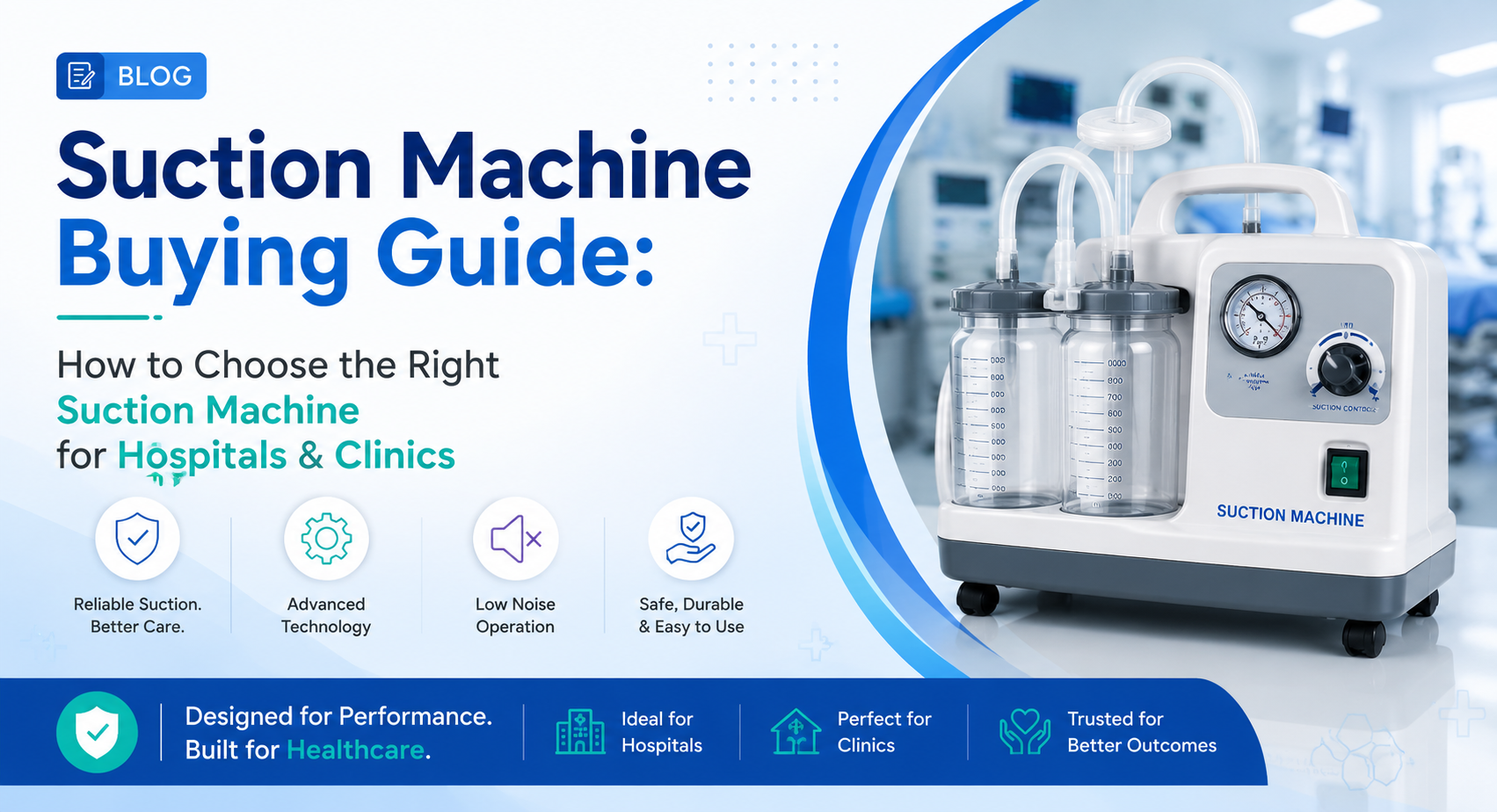
Choosing the right suction machine is not just about comparing prices or selecting a popular brand. For hospitals, clinics, dental setups, ambulances, and healthcare providers, the right suction machine directly impacts patient safety, emergency response efficiency, infection control, and overall clinical workflow. A low-capacity machine in a surgical environment can lead to poor fluid removal and interrupted procedures. On the other hand, buying an oversized or high-end surgical suction machine for a small clinic may unnecessarily increase costs without adding real value. This is why understanding your exact application, suction requirement, portability needs, and operational workload is extremely important before making a purchase decision.
This suction machine buyer guide will help you understand:
-
Which type of suction machine is right for your setup
-
What specifications actually matter
-
How to compare suction machines
-
Common buying mistakes to avoid
-
Which machine works best for hospitals, clinics, ambulances, dental practices, and home care
What is a Suction Machine?
A suction machine, also called a medical aspirator, is a device used to remove fluids such as mucus, blood, saliva, surgical fluids, or respiratory secretions from a patient’s airway or treatment area using vacuum pressure.
These machines are commonly used in:
-
Hospitals
-
ICUs
-
Operation theatres
-
Emergency rooms
-
Dental clinics
-
Ambulances
-
Home healthcare
In critical care and emergency situations, suction machines help maintain a clear airway and prevent respiratory complications. During surgeries, they help remove blood and fluids so doctors can work with better visibility and precision. Simply put, a suction machine is one of the most essential medical devices for airway management and fluid clearance.
Why Choosing the Right Suction Machine Matters?
Many healthcare facilities make the mistake of selecting suction machines based only on pricing. However, suction requirements vary significantly depending on the clinical environment. For example:
-
A dental clinic does not require the same suction power as an operation theatre.
-
A portable ambulance suction unit cannot replace a heavy-duty surgical suction machine.
-
A homecare patient may need a compact low-noise device rather than a high-flow hospital unit.
Choosing the wrong machine can lead to:
-
Inadequate suction performance
-
Frequent overheating
-
Poor emergency handling
-
Increased maintenance costs
-
Reduced equipment lifespan
-
Procedure interruptions
The right suction machine improves:
-
Clinical efficiency
-
Patient safety
-
Infection control
-
Emergency preparedness
-
Long-term operational reliability
That is why buyers should focus on application-based selection instead of simply comparing prices.
Understand Where the Suction Machine Will Be Used
Before comparing models, identify your primary use-case.
For Hospitals & ICUs
Hospitals generally require high-capacity suction machines capable of continuous operation. These environments often deal with surgical fluids, airway management, and emergency suction procedures. Recommended:
-
Surgical suction machines
-
Dual jar systems
-
Continuous-duty motors
-
High vacuum pressure
For Clinics
Small clinics usually require moderate suction capacity for regular procedures and patient management. Recommended:
-
Electric suction machines
-
Medium flow rate
-
Compact design
-
Low maintenance models
For Dental Clinics
Dental procedures require continuous saliva and fluid removal with smooth operation and low noise. Recommended:
-
Silent suction systems
-
Compact electric suction machines
-
Reliable continuous suction performance
For Ambulances & Emergency Response
Emergency environments require portable systems that work during transport and power interruptions. Recommended:
-
Portable suction machines
-
Battery-operated units
-
Lightweight compact models
For Home Care
Homecare patients usually require simple and easy-to-operate suction machines for respiratory care and tracheostomy management. Recommended:
-
Portable low-noise suction machines
-
Lightweight devices
-
Easy maintenance systems
Choose the Right Type of Suction Machine
Different suction machine categories are designed for different healthcare applications.
Portable Suction Machine
Portable suction machines are lightweight and easy to carry. Most models include rechargeable battery backup for mobile use.
Best For:
-
Ambulances
-
Emergency care
-
Home healthcare
-
Patient transport
Key Advantages
-
Easy mobility
-
Battery support
-
Compact size
-
Quick emergency operation
Before Buying, Check:
-
Battery backup duration
-
Charging time
-
Weight of the machine
-
Noise level
-
Portability features
Portable suction machines are ideal when mobility and quick access are more important than heavy-duty continuous suction.
Electric Suction Machine
Electric suction machines are the most commonly used systems in hospitals and clinics.
Best For:
-
Clinics
-
General wards
-
Dental setups
-
Regular patient care
Why Buyers Prefer Electric Models
These machines provide:
-
Stable suction performance
-
Reliable daily operation
-
Better suction consistency
-
Lower maintenance requirements
What to Evaluate Before Buying
-
Vacuum pressure
-
Flow rate
-
Jar capacity
-
Noise level
-
Build quality
Electric suction machines offer the best balance between affordability and clinical performance.
Surgical Suction Machine
Surgical suction machines are heavy-duty systems designed for operation theatres and critical care applications.
Best For:
-
Operation theatres
-
ICU
-
Trauma care
-
Major surgeries
Why Hospitals Prefer Surgical Models
During surgeries, continuous removal of blood and fluids is necessary for visibility and precision. Standard portable machines are usually insufficient for such procedures.
Important Features to Prioritize
-
High vacuum pressure
-
Continuous-duty motor
-
Dual collection jars
-
Overflow protection
-
Heavy-duty construction
Hospitals performing frequent surgeries should always invest in high-performance surgical suction machines.
Understand Suction Pressure & Flow Rate
This is one of the most important buying factors. Many buyers confuse suction pressure with flow rate, but both serve different purposes.
Suction Pressure
Suction pressure determines how strongly fluids are pulled. Higher suction pressure is required for:
-
Surgical procedures
-
Thick fluid removal
-
ICU use
-
Trauma care
Lower suction pressure is generally sufficient for:
-
Dental use
-
Homecare
-
Basic airway clearance
Buying unnecessarily high suction pressure for low-intensity applications may only increase costs without practical benefit.
Flow Rate
Flow rate determines how quickly fluids are removed. Higher flow rates are important for:
-
Emergency procedures
-
High-fluid surgeries
-
Continuous suction applications
A machine with poor flow rate may slow down procedures even if vacuum pressure is high. For hospitals and OTs, both high suction pressure and high flow rate are essential.
Single Jar vs Double Jar Suction Machine
This is another important buying decision many healthcare buyers overlook.
Single Jar Suction Machine
Suitable For:
-
Clinics
-
Dental setups
-
Homecare
-
Basic procedures
Advantages
-
Lower cost
-
Compact design
-
Easy maintenance
However, single jar systems may require more frequent emptying during long procedures.
Double Jar Suction Machine
Suitable For:
-
Hospitals
-
OTs
-
ICU
-
Surgical applications
Advantages
-
Higher fluid collection capacity
-
Continuous workflow
-
Better for long-duration procedures
Double jar systems reduce interruptions and improve efficiency during surgeries and critical care procedures.
Oil-Free vs Oil Lubricated Suction Machine
Many buyers ignore motor technology while selecting suction machines.
Oil-Free Suction Machine
Advantages
-
Low maintenance
-
Cleaner operation
-
Better hygiene
-
Reduced servicing requirements
Most modern hospitals and clinics prefer oil-free suction systems because they are easier to maintain.
Oil Lubricated Suction Machine
Advantages
-
Durable heavy-duty performance
-
Suitable for prolonged use
Drawbacks
-
Higher maintenance
-
Requires regular servicing
For most modern healthcare environments, oil-free suction machines are generally the preferred option.
Check Safety Features Carefully
A good suction machine should include proper safety mechanisms to ensure both patient safety and equipment protection.
Important Features to Look For
#### Overflow Protection Prevents fluids from entering and damaging the motor. #### Bacterial Filter Helps maintain infection control. #### Vacuum Regulator Allows adjustment of suction intensity according to procedures. #### Thermal Protection Protects the machine from overheating during long usage. #### Auto Shut-Off System Improves safety during overflow situations. Ignoring safety features may lead to equipment failure and higher maintenance costs.
Evaluate Noise Level & Portability
Noise level becomes extremely important in:
-
ICUs
-
NICUs
-
Pediatric care
-
Homecare environments
Low-noise machines improve patient comfort and reduce disturbance during treatment.
If portability is important, buyers should also evaluate:
-
Weight
-
Handle design
-
Compact size
-
Battery support
This is especially important for ambulances and mobile healthcare setups.
Suction Machine Price in India
Suction machine price in India depends on:
-
Machine type
-
Vacuum pressure
-
Flow rate
-
Jar capacity
-
Battery backup
-
Brand
-
Intended application
Approximate Price Range
-
Portable suction machine: ₹3,000 – ₹10,000
-
Electric suction machine: ₹8,000 – ₹25,000
-
Surgical suction machine: ₹20,000 – ₹80,000+
Instead of selecting the cheapest machine, healthcare buyers should prioritize:
-
Long-term durability
-
Reliable suction performance
-
Service support
-
Clinical suitability
A cheaper machine with poor suction quality may increase operational problems over time.
Common Mistakes Buyers Should Avoid
Buying Only Based on Price
Low-cost machines may compromise suction quality and durability.
Choosing Portable Machines for Surgical Use
Portable models are not designed for continuous heavy-duty hospital applications.
Ignoring Future Patient Load
Always consider future expansion and operational growth.
Overlooking Safety Features
Overflow protection and bacterial filters are essential.
Ignoring After-Sales Service
Service availability and spare support are critical for long-term usage.
Which Suction Machine Should You Buy?
Choose Portable Suction Machines If:
-
You need mobility
-
Ambulance use is involved
-
Homecare support is required
Choose Electric Suction Machines If:
-
Daily clinic use is required
-
Moderate suction applications are common
-
Budget and performance balance is important
Choose Surgical Suction Machines If:
-
You operate an OT or ICU
-
Continuous suction is needed
-
High vacuum performance is required
Conclusion:
Selecting the right suction machine requires more than comparing prices or brands. The ideal machine depends on your healthcare setup, patient load, application type, portability needs, and suction requirements.
Before buying, always compare:
-
Suction pressure
-
Flow rate
-
Jar capacity
-
Safety features
-
Noise level
-
Battery backup
-
Maintenance requirements
-
Service support
A properly selected suction machine improves patient care, supports clinical efficiency, reduces operational interruptions, and ensures reliable performance during critical medical procedures.
For hospitals and clinics, investing in the right suction machine is not just an equipment purchase — it is an investment in safer and more efficient healthcare delivery.